Posts

In Such Cunning Disguise

Image
"History repeats itself, but in such cunning disguise that we never detect the resemblance until the damage is done."  —Sydney J. Harris Inflation, the U.S. dollar’s volatility, unemployment, and an increase in the U.S. money supply... In spite of the concerns we have when we watch the morning news, we Americans tend to believe that our long-term outlook is good because, as we interpret our relatively brief history, we're Americans and we always come out on top. But the history of the world has many examples of great empires and nations whose leaders felt the same way, but turned out to be wrong. We can look, for instance, to the Roman Empire which enjoyed 200 years of prosperity until it collapsed over the course of the next 300 years.  But the machinery of the collapse didn’t begin during the final 300 years of the Empire. It started long before with sometimes short-sighted economic and monetary policies and practices. Then, incrementally, th eir excesses, the border in...

Yellow Footprints: An Anniversary Reflection

Image
Hurry Up and Wait... I grew up in a small community in southern Illinois–Newton, Illinois–where people generally knew each other or at least knew   of   each other. It was–and still is–a nice town. It’s the kind of town that still holds a fall parade where tractors and marching bands own the streets. People sit along the curb in their chairs while the kids play along the street. The people there cherish the tempo and lifestyle, quietly aware that if everyone lived that way, it would be a much better world. I wasn’t exactly setting any academic records in high school, so I needed a change of pace and some way to transition to a successful track somewhere, somehow. I had thought about the military, but I hesitated to follow through. I wasn’t sure I would be cut out for the military life, and I didn’t know which branch of the service to enter. I was very certain that if I did join the military service, it wouldn’t be the Marines because I was pretty sure I couldn’t make it there....

Finding Alfred and Sarah Doss

Image
A few years ago, I was doing some genealogy research and came across an interesting photograph from the November 25, 1965 Wise County (Texas) Messenger that showed my great-great grandfather's headstone. The photo got me interested in trying to find his and my great-great grandmother's gravesites and maybe do a little maintenance on them while I was there. But first, I'd have to find the Oak Grove Cemetery just north of Decatur, Texas, where they were buried. They had originally settled in Collin County, Texas in the mid-1800s after they left Kentucky as part of the migration of Midwesterners to Texas. But within a couple of years of settling in as tenant farmers there, the Civil War started, and my great-great grandfather ended up in the Confederate army as a private in a cavalry unit. He returned home destitute at the end of the war and moved his family to a farm near Dallas, looking for a better future, still farming someone else's land. Finally, he ended up in the ...

Gaza

Image
The Gaza Strip was once a prominent trading center, historically advantageous for its location along the coast of the Mediterranean. We know from the Bible, Judges chapter 16, that Israelite warrior and judge Samson died in Gaza “with the Philistines” to get revenge on them. From Jeremiah chapter 47, we also know that Pharoah attacked the Philistines in Gaza. In fact, the Bible has more than a dozen references to Gaza, beginning with Genesis in which the borders of Canaan are identified. Then, in Judges 2:3 we read that God punished Israel for not driving the Canaanites from the Promised Land after He delivered the Israelites out of Egypt. In response, the Bible says God told the Israelites, “they will become traps for you, and their gods will become snares for you.” Some might say they're still paying on that penalty. But setting that aside, history informs us that in addition to the Philistines and the Egyptians, Gaza has also been occupied by the Babylonians and even Alexander t...

The Flight Line

Image
Marine Corps aviators in fleet squadrons have two “jobs.” The obvious one is their flying job. In my day, the other was simply what we referred to as our “ground” job, an assignment that contributed to the running of the squadron. When I checked in to HMM-365 in the Fall of 1985, my CO asked me what ground job I wanted, probably just to see where my head was. He was going to put me where he wanted to either way. "I don't care" wouldn't have been a good answer. With my experience as an enlisted infantryman, I wanted to be in a position where I could lead Marines. The place to do that in a squadron is in the aircraft maintenance department, so that’s where I told him I wanted to work. He said that he didn’t put new guys in the maintenance department right away, but he’d see how things worked out.  H e put me in an office pushing paper instead, but when someone told me that the best way to earn my way into the maintenance department was to jump on every post-maintenance ...

Serving with Uncle Mel

Image
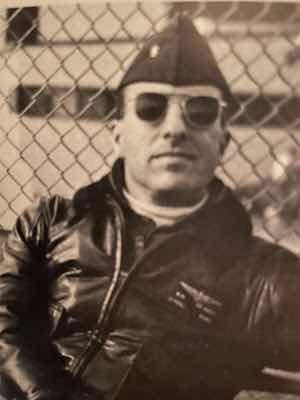
One of the rewards of a career in the military is the opportunity to serve with truly great people up and down the chain of command. That was certainly the case for me. This is a story—part of the story—of one of those genuinely great people, Melvin W. DeMars, Jr.  On October 18, 1983, Marine Medium Helicopter Squadron 261 (HMM-261) and the 22nd Marine Amphibious Unit (MAU) was underway on the helicopter carrier USS Guam (LPH-9) for a deployment to Lebanon as part of its Mediterranean deployment with the U.S. 6th Fleet. The squadron had already been to Lebanon after the Israelis invaded in June of 1982, so they had every expectation that the plans to return there were pretty firm. They were at sea for about a day, headed east toward the Mediterranean when, at around midnight on October 20, 1982, the Guam turned south. There wasn’t a lot of information circulating around the ship that indicated that anything had changed, but the Marines in the squadron knew that when you’re headed...

The Silent Legacy of James Henry Harris

Image
James Henry Harris was born near Creedmoor in Granville County, North Carolina in 1832. He apprenticed as a carpenter as a young man before starting his own business in Raleigh. When laws in North Carolina regarding free people of color became more aggressive in the 1840s, he moved to Ohio[1] where he attended school for two years. Within a decade, he traveled to and taught in Liberia and Sierra Leone where over the previous twenty years, thousands of freed slaves from the United States had resettled. Harris then moved to Terre Haute, Indiana where, in 1863, he was asked by Indiana Governor Levi Morton to help raise a regiment of U. S. Colored Troops for service in the Civil War.  After the war, he returned to North Carolina where he became a teacher for the New England Freedmen's Aid Society.[2] Harris soon saw a need to ensure that freedom for blacks included legal and political equality, so he entered politics. In 1865, he was elected to the North Carolina Freedmen...