Posts

Showing posts from 2026

Sometimes Better To Ask Forgiveness...

Image
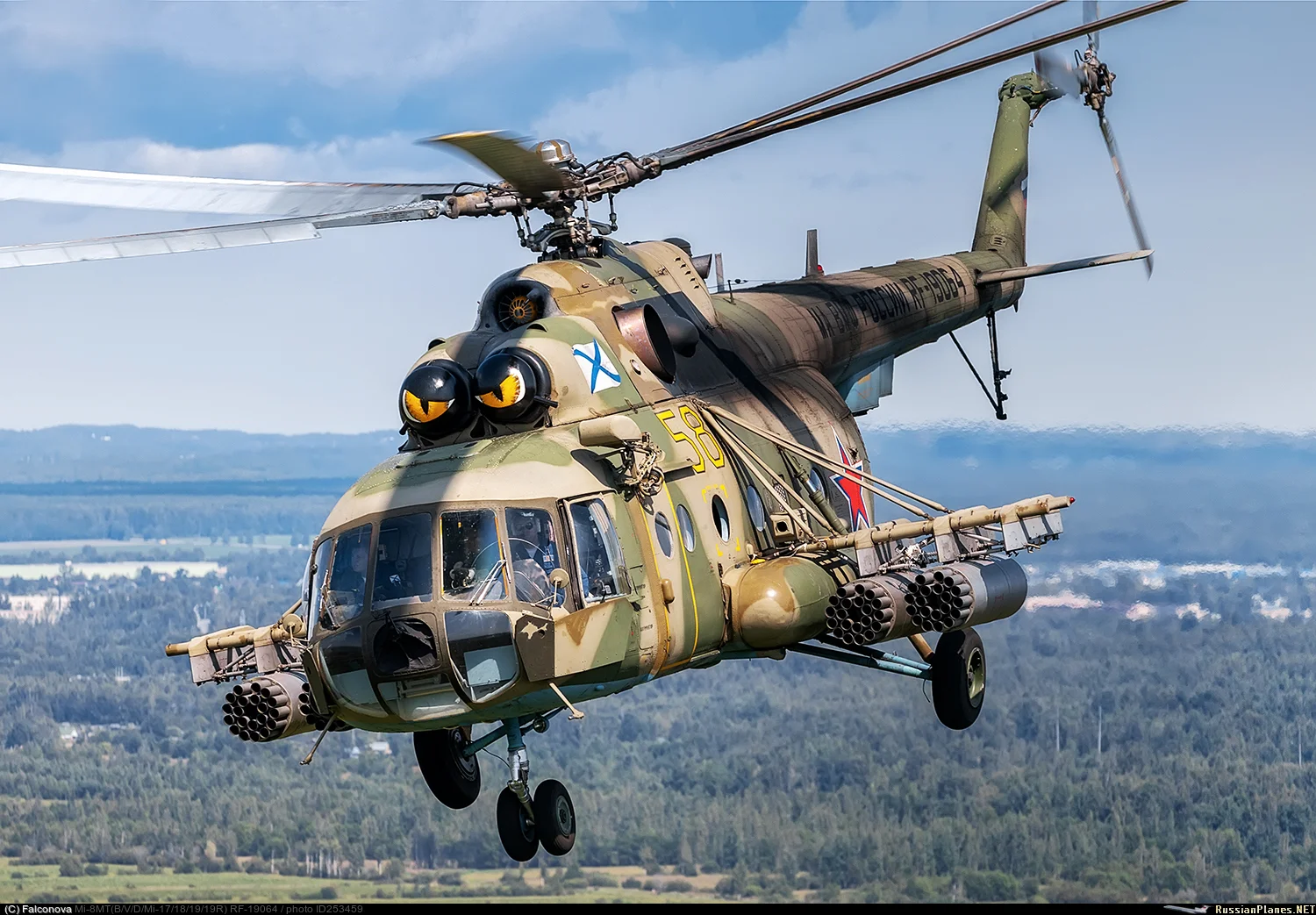
In early 1996, I was a member of Marine Medium Helicopter Squadron 162 (HMM-162), the aviation element of the 22nd Marine Expeditionary Unit (Special Operations Capable) on board the USS Guam (LPH-9). We were operating in the Adriatic Sea and ashore in Croatia, Bosnia-Herzegovina, and Albania as part of the peace enforcement force, the "implementation force" (IFOR), during Operation Decisive Endeavor. We were wrapping up our work in the Adriatic in early April, preparing to head to Israel for some exercises, when we received an order to prepare to redeploy to the west coast of Africa for potential operations in embattled Liberia. As we steamed toward the southern end of the Adriatic, we were either going to turn left toward Israel or right toward Liberia. By the time we reached the Mediterranean, it was a right turn. We arrived at "Mamba Station" off the coast of Liberia early in the morning of April 20th. When we arrived, fighting around the U. S. Embassy was pret...

The Myth of the Middle-Class “Crisis”

Image
In his book Basic Economics , economist Thomas Sowell observes that despite their “economic woes and worries,” middle-class Americans are “one of the most affluent groups of human beings ever to inhabit this planet.” He underscores the point with a August 1, 1999 New York Times column featuring a middle-class American family photographed in their own swimming pool under the headline: “The American Middle, Just Getting By.” That image and its caption mirror the ongoing narrative about a middle-class in crisis, but certainly not reality. The problem isn’t that middle-class families face tough financial decisions. The problem is the assumption that a middle-class family’s need to make those decisions itself is evidence of a crisis. It isn’t. It’s economics. At its core, economics is the study of how people use scarce resources which have competing uses. That definition from economist Lionel Robbins is a description of everyday life, not some abstract theory. It applies to all economies la...

The Failing Aviator

Image
When I was flying in the Marine Corps, we talked a lot about compartmentalization . For a pilot, that meant recognizing the stressors in your life—family, finances, relationships—and understanding what it takes to cope with them without carrying them with you into the cockpit. You didn’t ignore those pressures. You dealt with them. But when it came time to brief, pre-flight, and fly, you left them where they belonged—outside the aircraft. If you didn’t, you risked being distracted. You could be dangerous. At an aviation safety event, a psychologist gave a presentation titled “The Failing Aviator.” In it, he focused on compartmentalization and how poorly managed stress—especially from strained relationships—can erode judgment, focus, and ultimately safety. He told a story about a Marine Corps F/A-18 pilot. His wife struggled with the realities of his job—the late nights, the deployments, the uncertainty and danger of his job. Over time, the strain wore on both of them. She pressed him ...

It's Not Done 'Til It's Done

Image
More than two thousand years ago, Aristotle introduced the idea of potentiality and actuality—the notion that everything exists somewhere between what it is and what it could become. Fifteen centuries later, Thomas Aquinas carried that idea into a theological context. In his Summa Theologica , he argued that we aren’t static, but that we’re in motion, always moving from our potential toward our fulfillment. And ultimately, he said, that fulfillment isn’t found in comfort or achievement alone, but in coming to know God more perfectly, having been created in His image. The idea was that because he is a potentiality, he wouldn’t achieve true happiness any way other than in coming to know God more perfectly. But strip away the philosophy and the theology, and what remains is something we recognize in our own lives: We aren’t finished products. We’re works in progress—living somewhere between what we are and what we could be. The problem isn’t that we fall short. The problem is when we stop...

Fuji

Image
I think we all have had times when we did something, or thought about doing something, that didn’t seem like much of a big deal at the time, but then later its importance grew over time, and the decision you made to either do that thing or not turned out to be more meaningful than we had imagined at the time we made the choice. One such time for me was the time some friends and I climbed Mount Fuji in Japan. We were deployed to a camp at the base of the mountain from Okinawa. It was July 4, 1976 and we had a military parade in honor of the 200th birthday of our Nation and about a dozen of us thought it would be cool to climb it to celebrate the day after the parade. Mount Fuji isn’t a difficult mountain to climb, there’s just a lot of it: a little more than 12,000 feet of it. A lot of Japanese successfully make a pilgrimage of the climb every year. You can climb it in about eight hours if you follow a trail. It’s certainly no Denali. We wanted the climb to be special though, so we ...

From Fugitive Slaves to Sanctuary Cities

Image
At the height of recent immigration enforcement efforts in Minnesota, Florida Governor Ron DeSantis compared sanctuary policies and the refusal of some state and local officials to cooperate with federal authorities—actions he characterized as obstructing federal law—to the way some Northern states resisted enforcement of the Fugitive Slave Acts from the late 18th through the mid-19th century. He didn't draw a moral equivalence between slavery and illegal immigration; he framed the issue as one of the rule of law and federal supremacy under Article VI, Clause 2 of the U.S. Constitution. Interestingly, similar historical references have surfaced on the other side of the debate—but with a very different emphasis. U.S. Representatives Alexandria Ocasio-Cortez and Ayanna Pressley have suggested that there are moments in history when laws become so unjust that defiance is warranted, applying that logic to current immigration enforcement debates. Gavin Newsom has been more explicit, ...

Three-Fifths Wrong: What the Constitution Actually Did About Slavery

Image
We know from experience that it's difficult to distill an event to a sentence or even to a paragraph and accurately capture its fullness or its context and implications. Leaving important voids in the storytelling leaves it to others to tell it their own way to the point that they might distort the facts and the story. But the retelling of history is full of examples where that very thing happens, where the story is told and retold inaccurately. Sometimes it's done to illustrate a broader point. Sometimes it happens to make the history easier to follow and more relatable to students. Sometimes it arises out of mythmaking where over time, the myth takes on the appearance of truth. Take Mason Locke Weems for example. In his "The Life of Washington," Parson Weems wrote that young Washington damaged his father's cherry tree and confessed as much to him: "I cannot tell a lie...I did cut it with my hatchet." Some retelling has it that he didn't just cut th...

The Scorpion and the Frog

Image
Remember the old parable of the scorpion and the frog. A scorpion and a frog stood on riverbank one day. As the frog hopped toward the water to swim across, the scorpion asked him to carry him on his back to the other side. The frog answered, “No, no…I’m not going to do that. We’ll get halfway across then you’ll sting me and kill me.” But the scorpion answered quickly. “I would never do that. Think about it. If I sting you, you’ll die, and I’ll drown. It would doom us both.” Finally persuaded, the frog agreed. Sure enough, halfway across the river, the frog felt the sudden sting of the scorpion’s barb and the paralyzing venom spreading, his body going numb. As the frog faded into death and began to sink, he cried out, “Why would you do that? You’ve stung me and I'm dying! Now we’ll both drown!” The scorpion answered simply: “Of course I stung you. I’m a scorpion. It’s what I do.” We shouldn’t be surprised when actors behave according to their nature. The real mistake is expecting t...

Compromisers and Horse Traders

Image
In 1786, a group of farmers in western Massachusetts—many of them Revolutionary War veterans—rose up to stop the courts from seizing their land for unpaid debts. Led in part by Daniel Shays, they shut down the courts and attempted to seize a federal arsenal in Springfield. In response, Massachusetts Governor James Bowdoin raised a militia and dispersed the rebellion. That episode spotlighted a fundamental weakness in the early American national government under the Articles of Confederation. There was no standing army, no reliable authority to raise one, and no clear power for the national government to intervene in state-level unrest. The implication was unmistakable: if a larger or multi-state rebellion arose, there might be no coordinated response at all, potentially leaving states to act independently to preserve their own security. The rebellion also sharpened awareness of broader defects in the Articles of Confederation. The national government had no power to tax, which kept it ...

Red Lines, Real Consequences: The Debate That Never Came

Image
In every American war there is what should be an indelible truth: that we pull together and stand behind our mission and our troops. Support among our countrymen should be unambiguous and unwavering. Yet too often, that unified front becomes fractured by politics once the fighting begins. Of course, debate, dissent, and political maneuvering are the lifeblood of our constitutional republic. They're such an important part of our collective problem-solving formula that we protected that right in the U.S. Constitution. The issue with the politics isn't the dissent—it's the timing. And poor timing signals weakness. For decades, American leaders of both parties have declared that the United States would never tolerate a nuclear-armed Iran. Those statements weren't whispered in some back room; they were repeated openly by presidents, secretaries of state, members of Congress, and allies abroad. They were a red line drawn by a long line of administrations intended to assure Ir...

The Great Steak and Lobster Scandal

Image
I've resisted commenting on the outrage over the Department of War's purchase of steak and lobster for our troops. Now, I think it's time for me to weigh in. I never considered any part of my military service to be scandalous or frivolous, but I guess it's time to rethink that. I enlisted in the Marine Corps in the mid-1970s. In the 24 years that followed, I deployed at sea for three months or more six times, four of those times for six months or more. Confession time... On just about every one of those occasions, we were treated to a meal of steak — and sometimes lobster — at some point along the way. And we lapped it up wantonly, as if it was something that we should actually feel good about. But the scandal didn't end there. I started out as an infantryman, and when we were in the field on Thanksgiving or Christmas they would actually truck a hot holiday meal out to us — usually a turkey dinner with the trimmings for both holidays. They did this even though one o...

Imminence and the Pearl Harbor Dilemma

Image
  “When you see a rattlesnake poised to strike, you do not wait until he has struck before you crush him.”   —Franklin D. Roosevelt, September 11, 1941 On November 26, 1941, a Japanese carrier force slipped out of port and headed east across the Pacific under strict orders to attack the U.S. Navy fleet at Pearl Harbor. We know how that turned out, but suppose the United States had learned that the Japanese fleet had sailed and had intelligence that disclosed its mission before the Japanese struck on December 7. Would Washington have been justified in hitting them first? In hindsight, the answer is yes, but what about when that question mattered most: before the attack? More than a century earlier, a similar question helped shape the principle of self-defense in international law. In 1837, British forces crossed into American territory and destroyed the American steamer Caroline , which had been supplying Canadian rebels. The incident—known as the Caroline Affair—created a dip...

Why Can't Iran Have a Nuclear Weapon?

Image
The United States has nuclear weapons. So does Russia, China, France, The United Kingdom, India, Pakistan, North Korea, and Israel. Nine nations have them. Why not Iran? To answer that question, it helps to understand what Iran is—and what it isn't. I was a college student when the Shah was deposed in 1979. At the time, many observers described the Iranian Revolution as a freedom-seeking domestic uprising against a dictatorship, and that interpretation still persists among some commentators today. But revolutions that seek liberty don't replace one autocrat with another. What emerged under Ayatollah Ruhollah Khomeini wasn't a freedom movement. It was an effort to reshape the moral, political, and cultural order of Iranian society according to his Islamic revolutionary worldview. Khomeini believed Western political and cultural influence had corrupted the Muslim world and sought to replace it with a system governed by Islamic law and clerical authority. Khomeini taught that ...

The Imams

Image
The UN General Assembly passed a resolution on July 31, 2006 demanding that Iran stop enriching uranium or face sanctions. A month later, Iranian President Mahmoud Ahmadinejad made a statement before the UN General Assembly that, in view of the resolution, caught people's attention: "I emphatically declare that today's world, more than ever before, longs for just and righteous people with love for all humanity, and above all longs for the perfect righteous human being and the real savior who has been promised to all peoples and who will establish justice, peace, and brotherhood on the planet." True to form, his statement was cryptic yet was intended to be meaningful once audience solved the riddle. So, I dug, figured out that he was referring to Imam Mohammed al-Mahdi, the "Twelfth Imam," and I wrote an article about it. Ahmadinejad was less mysterious when he addressed the General Assembly two years later: "Oh God, hasten the arrival of Imam al-Mahdi, ...