Posts

Showing posts from 2023

Serving with Uncle Mel
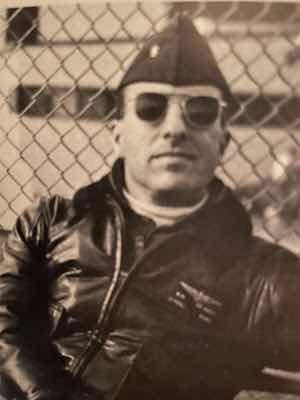
Image
One of the rewards of a career in the military is the opportunity to serve with truly great people up and down the chain of command. That was certainly the case for me. This is a story—part of the story—of one of those genuinely great people, Melvin W. DeMars, Jr.  On October 18, 1983, Marine Medium Helicopter Squadron 261 (HMM-261) and the 22nd Marine Amphibious Unit (MAU) was underway on the helicopter carrier USS Guam (LPH-9) for a deployment to Lebanon as part of its Mediterranean deployment with the U.S. 6th Fleet. The squadron had already been to Lebanon after the Israelis invaded in June of 1982, so they had every expectation that the plans to return there were pretty firm. They were at sea for about a day, headed east toward the Mediterranean when, at around midnight on October 20, 1982, the Guam turned south. There wasn’t a lot of information circulating around the ship that indicated that anything had changed, but the Marines in the squadron knew that when you’re headed...

The Silent Legacy of James Henry Harris

Image
James Henry Harris was born near Creedmoor in Granville County, North Carolina in 1832. He apprenticed as a carpenter as a young man before starting his own business in Raleigh. When laws in North Carolina regarding free people of color became more aggressive in the 1840s, he moved to Ohio[1] where he attended school for two years. Within a decade, he traveled to and taught in Liberia and Sierra Leone where over the previous twenty years, thousands of freed slaves from the United States had resettled. Harris then moved to Terre Haute, Indiana where, in 1863, he was asked by Indiana Governor Levi Morton to help raise a regiment of U. S. Colored Troops for service in the Civil War.  After the war, he returned to North Carolina where he became a teacher for the New England Freedmen's Aid Society.[2] Harris soon saw a need to ensure that freedom for blacks included legal and political equality, so he entered politics. In 1865, he was elected to the North Carolina Freedmen...

Rescue from Mogadishu (Part 9): "Muscat"

Image
Each of our aircraft passenger manifests told a story. One listed the names of Kuwaiti and Soviet diplomats.  Another roster included the name of a woman who had been shot, another named a man who had suffered knife wounds, and another named the Sudanese ambassador’s wife who was about to give birth. The manifest of LtCol Wallace’s aircraft included the name of a woman who boarded a helicopter with a parachute draped around her, the only personal belonging she had salvaged. [1] She reassured crew chief Corporal Tommy Sheffield that she wouldn’t jump out of the aircraft during the flight to the Guam. [2] The evacuation in Mogadishu ultimately extracted 281 people from 30 nations, including sixty-one Americans, thirty-nine Soviet citizens, seventeen British citizens, twenty-six Germans, and various numbers from twenty-six other nations. That included twelve heads of diplomatic missions: eight ambassadors and four chargés d’affaires. [3] U.S. Embassy Public Affairs Officer Karen Agui...

Rescue from Mogadishu (Part 8): "An Eastern Exit"

Image
At just before 11:00 PM on January 5th, ten CH-46E helicopter crews, five from HMM-263 and five from HMM-365, began bubbling up to the Guam’s flight deck to man their aircraft. The plan called for the mission to be completed in four waves of five aircraft. Five of our HMM-263 aircraft—callsign “ Thunder ”—would go in for a load of evacuees first. As we departed the Embassy grounds and headed back to the USS Guam , mission commander LtCol Wallace would radio a code word that would signal the five HMM-365 aircraft—callsign “ Rugby ”—under flight leader LtCol Bob Saikowski to launch toward Mogadishu. That would happen twice. As we walked across the dimly lit flight deck toward our aircraft, the Guam’s flight deck speaker system, which was normally active with calls and instructions dedicated to controlling the movement of aircraft, instead grabbed the attention of the Marines and sailors on the flight deck with the familiar strains of Lee Greenwood’s God Bless the USA . We stopped and t...

Rescue from Mogadishu (Part 7): "Situation Well In Hand"

Image
As soon as the helicopters landed, the 60-man security force quickly took up positions around the Embassy compound. The SEALS ran in a vee formation toward the Chancery while the Marines forced the aggressors with the ladders away from the Embassy wall. [1] The SEAL team was primarily responsible for working with the Embassy’s five-member Marine Security Guard (MSG) force to protect the Ambassador. Meanwhile, the 46 Marines who comprised the balance of the security force established a perimeter to secure the Embassy compound. [2] Karen Aguilar, the Public Affairs Officer for the U.S. Embassy in Mogadishu, later said that the arrival of the Marines was both startling and fearsome, “They must have been carrying 200 pounds of equipment, they looked about seven feet tall, and on every inch of their bodies they had this terrible paint. They looked ugly. They looked like swamp creatures.” [3] The description was a compliment. As desperate as Ambassador Bishop had been to get Marines in the ...

Rescue from Mogadishu (Part 6): "Super Stallions to the Front"

Image
At 5:15 PM (Mogadishu time) on the 4th, the two Super Stallions took off from the Trenton and landed on the Guam where the crews turned in for a little sleep before launch time. The crews were awakened at 12:45 AM (Mogadishu time) on the 5th so they could conduct final mission briefings, review intelligence and weather reports, and receive updated maps and satellite images of the Embassy compound. Threats included small arms fire, SA-2 and SA-3 high-altitude surface-to-air missiles, and anti-aircraft artillery (AAA) scattered throughout the Mogadishu area. By 2:30 AM (Mogadishu time), the 60-man security force consisting of Marines from the 1st Battalion, 2nd Marine Regiment and a 9-man SEAL team, boarded the two aircraft. Seventeen minutes later, the two giant helicopters, armed with .50 caliber machineguns on each side of the aircraft and an M-60 machinegun mounted on the ramp, lifted off from the deck of the Guam to begin their 466-mile overwater flight to Mogadishu. [1] Operatio...

Rescue from Mogadishu (Part 5): "Not Another Night Like That"

Image
As aggressively as we planned on the Guam , we couldn’t do anything about what was happening at the Embassy, at least not yet. Late in the evening on January 3rd, Embassy buildings were hit by machinegun fire. Then the next morning on the 4th, an Embassy warehouse was struck by a rocket-propelled grenade (RPG) and armed looters fired through gaps in the Embassy fencing until the guards and security staff returned fire and forced them to retreat. [1] By around midday on January 4th, Ambassador Bishop believed the Embassy couldn’t hold out much longer as he reported that the Embassy was “falling behind the curve in our ability to protect ourselves from the lawlessness which now prevails in Mogadishu.” He was certain that they couldn’t hold out until January 7th when the Marine helicopters were originally estimated to arrive, so he requested an “immediate airlift from Saudi Arabia of a parachute force sufficient to provide augmented security to the Chancery and JAO (Joint Administrative O...

Rescue from Mogadishu (Part 4): "By Day or By Night"

Image
With the situation at the Embassy falling apart rapidly, we needed to consider options for putting troops in the Embassy compound earlier than the projected January 7th evacuation date.  The Trenton , which had been traveling with us, had two giant U.S. Marine CH-53E Super Stallion helicopters from Marine Heavy Helicopter Squadron 461 (HMH-461) that were able to refuel in flight. This refueling capability meant that theoretically, we were never too far from the Embassy to help. However, the first look at that option wasn’t very promising. None of the pilots had practiced aerial refueling in six months and the refueling probes had been removed from the helicopters to make room for the aircraft on the Trenton . [1] That option had other practical limits too, including crew rest requirements and the risks associated with conducting inherently dangerous aerial refueling evolutions on long overwater legs in the dark. Still, something had to be done. If the CH-53Es had their refueling p...